
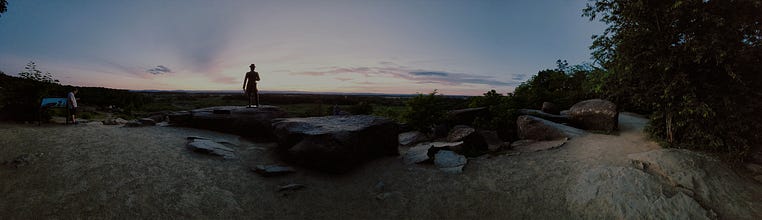

Riding into Gettysburg we were met with a cinematic sunset. Fire in the West, burning through the trees concealing Confederate Avenue across the rolling fields. I kept swerving, so the Gunsmith told me to pull over on the Emmitsburg Road, within sight of the south end of town. There wasn’t much traffic, so I agreed and pulled off and got out. Near there I found a sight line up the road that cuts the southern field in two. It was time to start seeing the ground through the correct “glass,” as they would have said in 1863. In history studies we call this constructing a “lens,” and to construct the appropriate example we need to understand the ground itself.
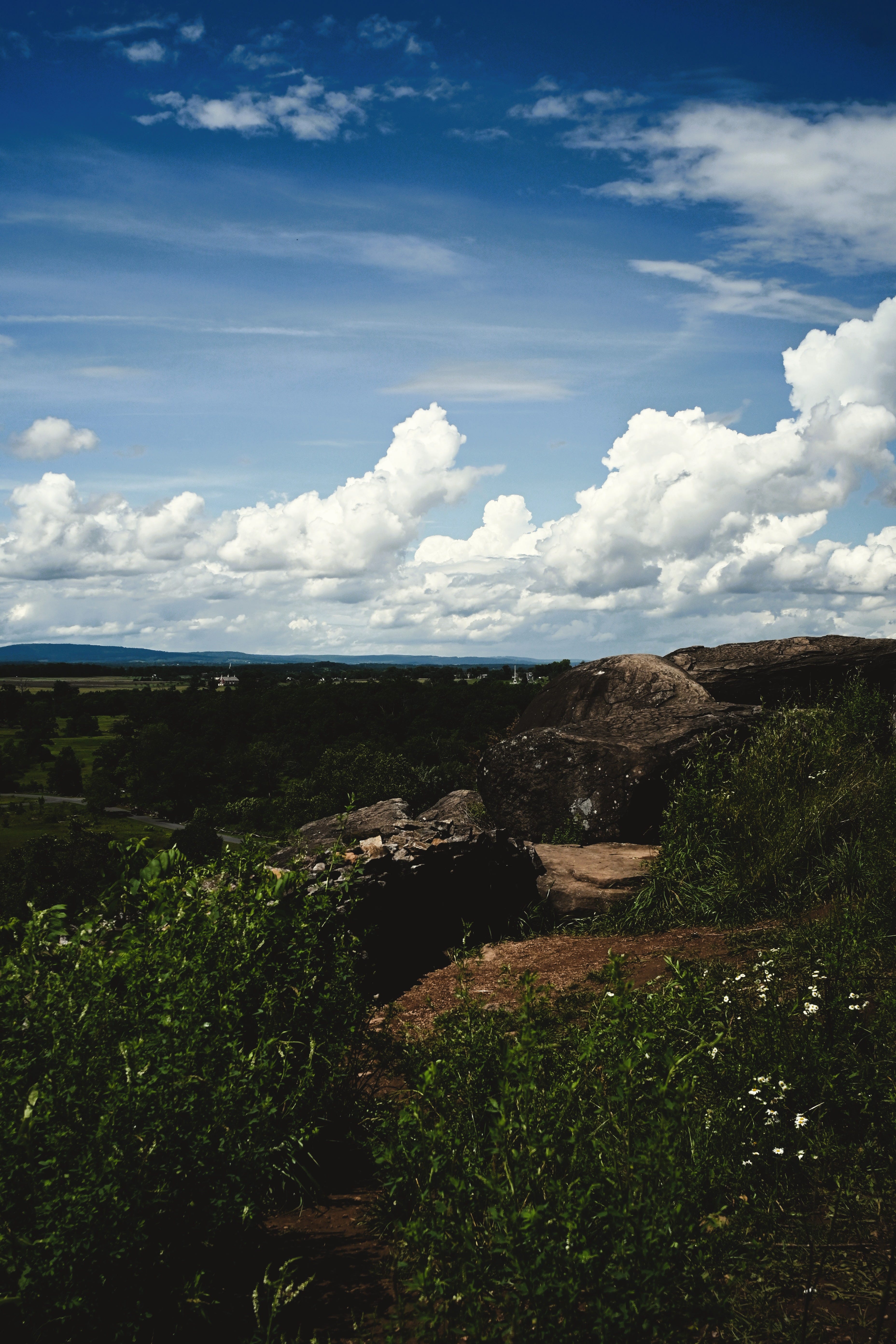
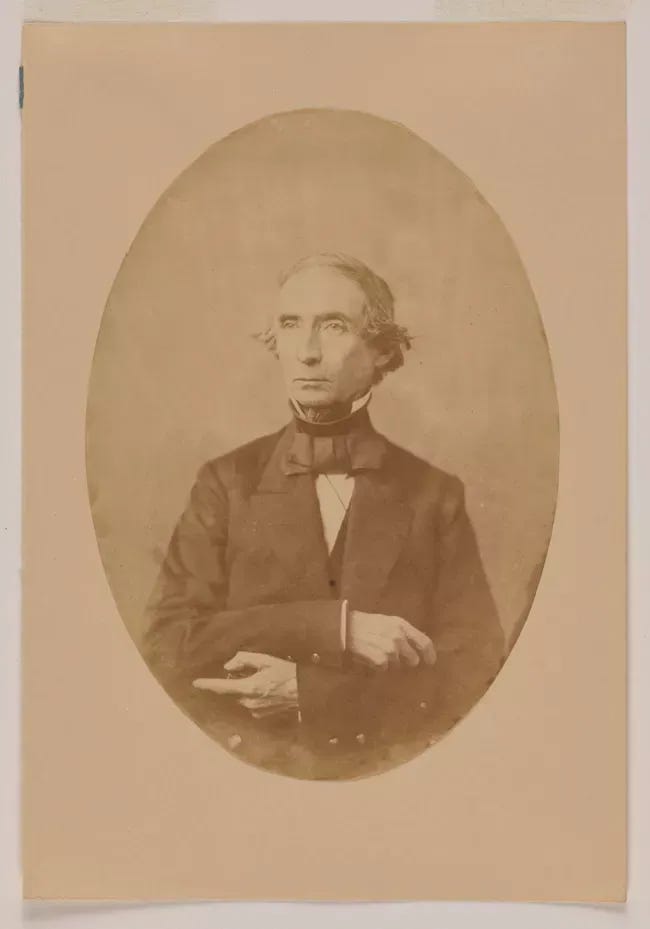
Back then, it wasn’t multi-domain operations, it was reading the “ground,” the Earth that is, and understanding what it offered and rejected. This is just one of the fundamental tenets pushed from the 1820s through the 1860s at the United States Military Academy at West Point. At “The Point,” the supreme voice of cutting edge American military science was Dennis Hart Mahan. For Professor Mahan, war added up to the ground, troops, and the objective. The ground, of course, was the primary factor because terrain governs strength, movement, visibility, and the esprit de corps (spirit of the corps).
The experience of the commanding officer, both personal and professional, came into play as well, and the man riding point for the Army of the Potomac had it in spades. John Buford was a West Point graduate with the class of 1848, assigned to the US Dragoons when he graduated. Buford would make the rounds fighting resistant Indians, a Mormon revolt in Utah, and radicals in Kansas warring over the expansion of slavery. What’s most important, though, isn’t who Buford fought. Out West, modern ideas of maneuver warfare and prudent logistics were constantly employed to help US Cavalry Troops in their attempt to cover millions of square miles during the interwar period. Between the Mexican War (1846-1848) and the Civil War (1861-1865), doing more with less was the norm in those theatres and Buford, who had been tasked with quartermaster duty on more than one expedition, rode front and center while he also coordinated garrison life as the US Army evolved cavalry doctrine.
By the third summer of the Civil War (1863) Buford had climbed his way up the 2nd US Cavalry ladder. He’d been promoted to brigadier general the previous Summer, commanding a brigade in multiple major engagements. The most important of those was his defense of Lewis Ford at the end of Second Bull Run (Second Manassas) in August of 1862.
As Pope’s columns fled across the stone bridge on the Warrenton Turnpike, heading east on its second retreat of the war from that field, Lee sees an opportunity to complete the Army of the Potomac’s total defeat. JEB Stuart was given the task of getting in behind the retreating Union ranks by way of the Ford’s to the south on Bull Run. If Stuart could cut off the retreat, Pope’s army would be trapped, and Lincoln would have lost an entire army right on Washington DC’s doorstep. Brigadier General Beverly Robertson was dispatched with a cavalry element to make the flanking maneuver across Lewis Ford, the more northern of the two southern fords. Crossing there would put the pursuing confederate cavalry on a perfect northeast angle to the Warrenton Turnpike and into the right side of Pope’s retreating masses.
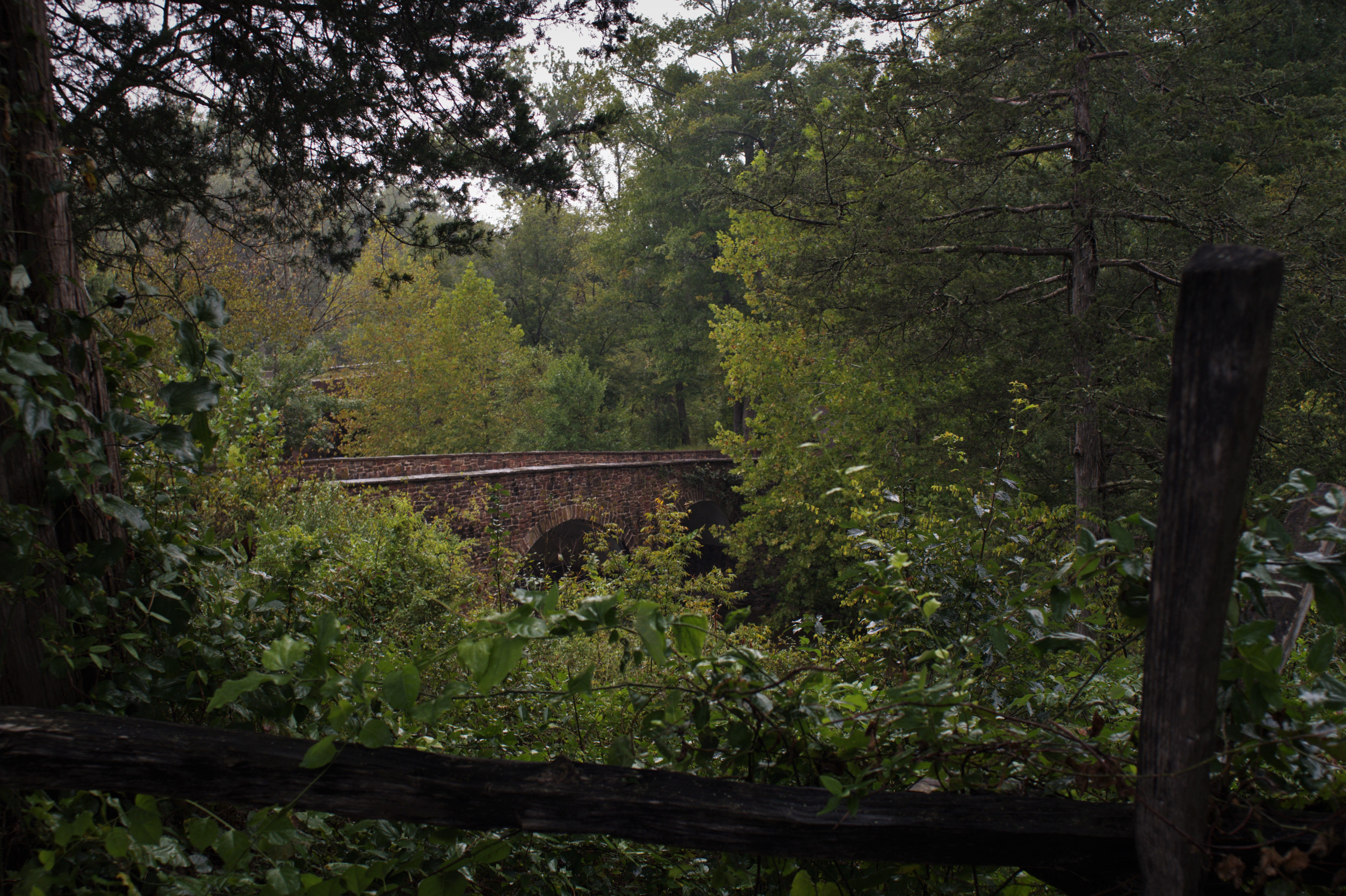
Lewis Ford was a chokepoint to make this maneuver, as the land on the southern bank of Bull Run at Lewis and Ball’s Ford is on a slightly elevated plateau. It’s easily identifiable on Virginia Lidar data when the original trace that split the fields south of the crossing is identified. It heads off toward the old turnpike after it climbs its way more gently up the north bank after crossing the creek. Buford and his cavalry brigade were responsible for protecting the shattered columns fleeing back to Washington, so it was time to do more with less. The compounding attributes of his education plus his western and civil war experience had already led him to focus on Lewis Ford as a threat to the army, but also it was a bottleneck. Buford knew the attack was coming, so he deployed to fight a delaying action at the ford. (38° 48.439′ N, 77° 30.374′ W / Check it out on your favorite geospatial platform like Google Earth)
It would be the second such stand in just three days, the other being the valiant yet futile dismounted fight at Thoroughfare Gap on August 28th, 1862. The reinforcements never came then, and on the 30th the reinforcements were running, vulnerable, and close bye. When Robertson spotted them he thought it was a scouting party. He ordered his brigade to charge not knowing he was sending his confederate riders into Buford’s full brigade, waiting behind and below. What happened next was the deadliest cavalry fight in the theatre up to that point. It only lasted a few minutes, and according to sources it was a vicious engagement with saber slashes to chests and backs, and point-blank pistol executions within the swirling collision. It didn’t stop the flood over the ford, but it bought the fleeing army time as Robertson’s initial elements were forced back to regroup with reinforcements and hit the crossing again. By the time the confederate cavalry managed to find the front of Pope’s retreat, darkness was closing in, leading Robertson to fall back to safer ground.
Before we take a closer look at Buford’s lens on the first days fighting at Gettysburg, we can take a crack at understanding it by analyzing what happened at Lewis Ford. What was the US Cavalry’s job? The objective? That was simple, it was to prevent the envelopment of the retreating Army of the Potomac. What did Buford have to work with? He had mounted troops that were outnumbered by the enemy that was closing in, so, he needed what we call a “force multiplier” in more modern doctrine. We refer to the primary factor when assessing the situation, the ground and what it offered and denied. The crossing was a way for Buford to expand his brigade’s ability to defend the ground at the ford and protect the army… simple, right? Had the engagement happened closer to the Warrenton Turnpike, the ability to regroup and establish contingent or staggered skirmishing lines in the fields between the crossing and the retreating army would have been nearly impossible.
By engaging Robertson up on the flats on the southern side of the ford, Buford gave himself options that were allowed by the topography. Fighting the initial phase on the flats meant he could also control the subsequent exchanges that would happen as the superior numbers of confederate cavalry were forced to cross the ford in narrow order. This played perfectly in the favor of a smaller defending force that’s objective was always to delay the enemy and not hold the position itself. The ford and its surrounding ground governed how Buford could use his outnumbered force effectively. It allowed him to determine and even dictate the will of the enemy, even with their superior numbers. It lured the confederates into an engagement based on a hasty assumption by Robertson, who chose to fight Buford’s riders with his point element rather than waiting on the rest of his following column. John Pope’s army needed time to run, and John Buford engineered the achievement of that objective. It’s why he’s considered one of the few whose professional reputation increased following the Army’s humiliating defeat at Second Bull Run.
Weaving through the dinner traffic in Gettysburg in those burning colors and warm sounds of American summer are the reminders that this town is very much alive. It maintains an identity and appearance that breaks the same rules of time and space as the rebuilt wormwood fences and the preserved country lanes. It’s a living “chronolab.” We drive or walk the same route that Buford would have ridden as he evaluated the ground and the situation in town on the evening of June 30th, 1863. There weren’t any tourists looking for ghosts then, and the burger joints and gift shops weren’t there yet, obviously, just citizens that were worried. Two-thousand plus welcomed the appearance of blue uniforms after drilling their elderly town militia in the square for multiple evenings. You probably could have cut the tension with a sabre.
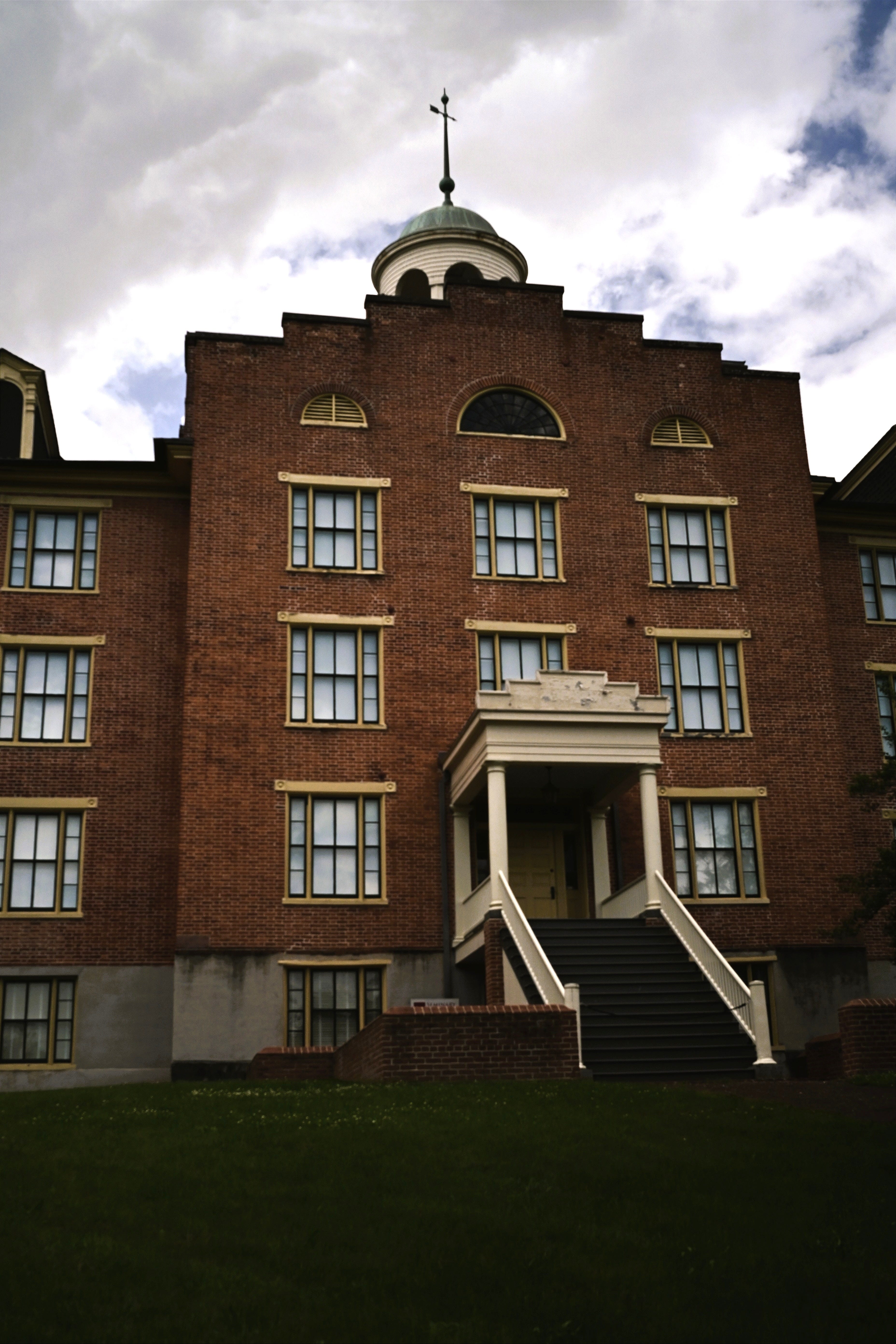
News of Lee’s invading army had been passing from town to town, word that confederate infantry and cavalry had been spotted throughout southern Pennsylvania. I had an ancestor in the 63rd Pennsylvania Volunteers, a regiment from the counties just West of the Alleghenies in Sickles’ Corps. Their regimental history is excellent with it’s descriptive narrative and it’s rendering of the Confederate foot soldiers is one of the most honest I’ve ever read. According to a women from town interviewed for the text, she’d caught three young rebels stealing food from her. They’re described as almost animal like, adorned in tattered rags, shoeless, their hair and beards overgrown such as to hide the men underneath. Her anger subsided when she saw the state of the men, and when the youngest of the three returned a short time later with his haul, asking for forgiveness, she forgave him and offered him more.
This is the intelligence General Buford would have been collecting as he first rode into town from the Emmitsburg Road and the evidence would have been more than just verbally apparent. A campaigning army was hard to hide as it would consume from the land and the properties around it. This principle is explained in the treatise texts assigned at West Point and other military academies. Texts written by early American military scientists, like DH Mahan, explained the pattern of resource consumption required of both marching and encamped armies. An army needed fuel (wood), food, and livestock for logistics, especially one that was lunging threadbare on its second invasion of the North. Lee was close, his worn out men drifting from their camps and regiments to see what they could find to eat or wear and Confederate couriers that ventured too close to town were apprehended, their written orders noted.
That’s one of the things I like to consider as a historian when I’m in Gettysburg, on one of those humid nights in the summer. I focus on the sense of a commander like Buford, his experience and education working simultaneously to assess the ground that was far less developed with far fewer trees then. A passage of historical fiction from The Killer Angels captures the behavior well with it’s portrayal of Buford riding around and learning what the ground had to offer the blue army snaking it’s way up the roads north behind him. Even though Michael Shaara’s work is historical fiction, it certainly renders the process of assessing the field through Buford’s “command lens.”
The cavalry commander also needed to see what the ground could deny the enemy. Could it allow him to engineer a collision ahead of the crossroads and pull the two massive stalking armies together for a showdown?
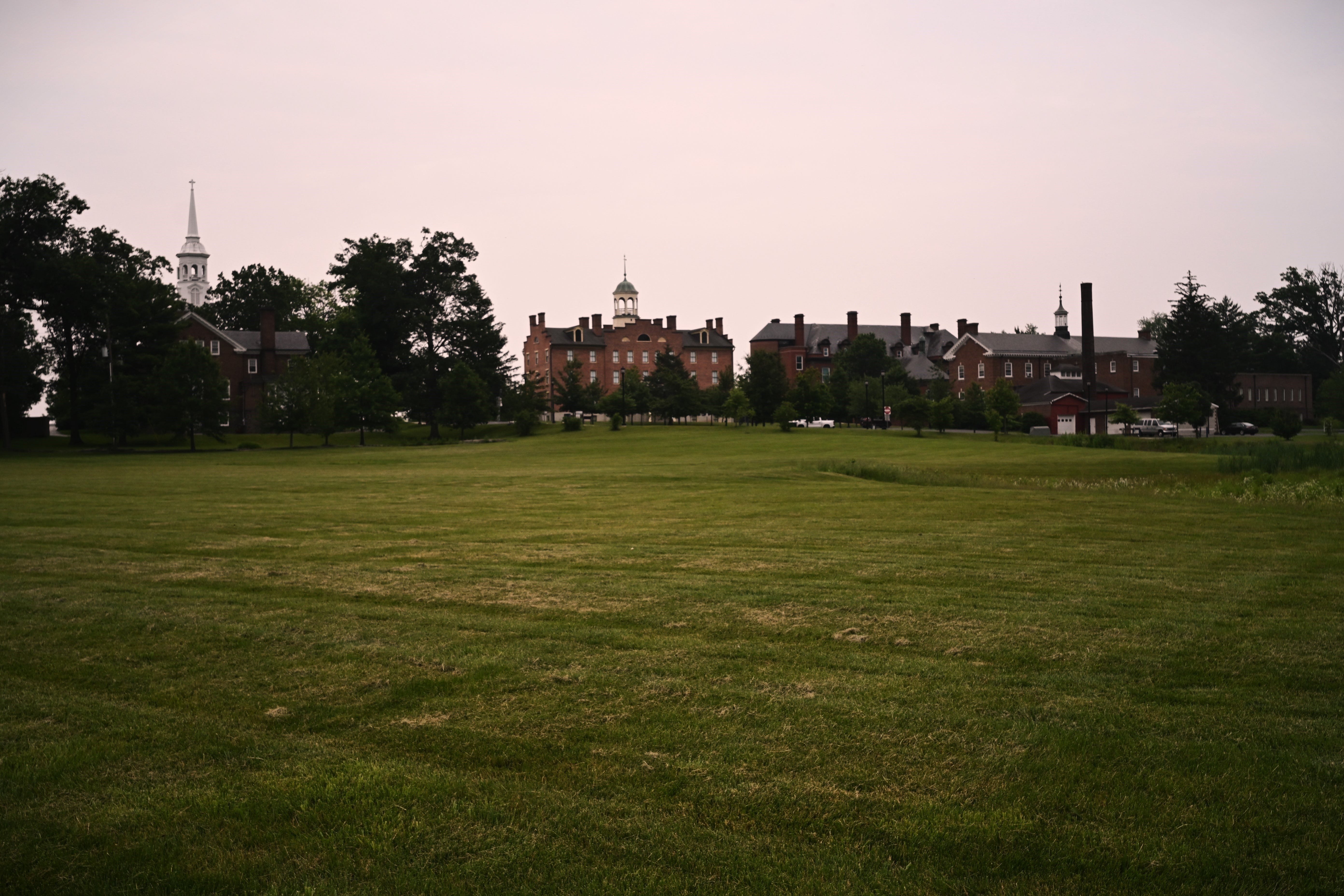
When you crest Seminary Ridge on the campus of the Lutheran Seminary in the evening, the horizon glow is enchanting. The first time the Gunsmith and I went over there, we walked from the southern edge of town leaving the phones behind. When you’ve hunched over a map long enough, studied the primary and secondary sources, and walked several fields, the dead reckoning kicks in and the gravity pulls you that way through town. On June 30th, 1863, Buford was pulled the same direction when all the evidence and his knowledge led to that western view in the fiery evening with a coming storm’s prevailing clouds just starting to intrude the sky. A beast was out there, close, he could feel it. The map told him the same thing. If Lee turned east this far north, the only place for his separated corps to converge was at the crossroads in Gettysburg. Visually scanning the surrounding ground he would have seen the dominating arrangement of hills on the southeastern side of town. They stood out then and they do now, even with the increased foliage. Once you’re standing on Seminary Ridge what Buford saw becomes obvious.
The lessons of the West, Thoroughfare Gap, and Lewis Ford would have been scratching at the front of his mind. Where was his fight? Where did his cavalry division need to make a stand so the rest of George Meade’s army could win an engagement that hadn’t even started? How long would it take for John Reynolds and Oliver Howard to make it there with the 1st and 11th Corps? He knew that if he staked his standard at the seminary and defended McPherson’s farm and ridge just to the west and Oak Ridge to the north, the collision would happen… a decisive engagement.
He sent a message back down the Emmitsburg Road to Reynolds with detailed intelligence that night. The film Gettysburg from 1993 shortchanges Buford here, showing Sam Elliot worriedly writing a request for orders from Reynolds. He didn’t need the 1st Corps commander to tell him what to do that evening, he was making the right moves on his own. The proof is that he waited to send the courier until after 10 pm. In my opinion, that signaled his intent to stay. Thanks to Reynolds, though, the 1st Corps had marched longer on June 30th to ensure they were close enough to be an early factor for the cavalry if needed. Reynolds was camped only 8 miles south in Emmitsburg, Maryland. Buford didn’t know it yet, but it wouldn’t be like Thoroughfare Gap this time around.